
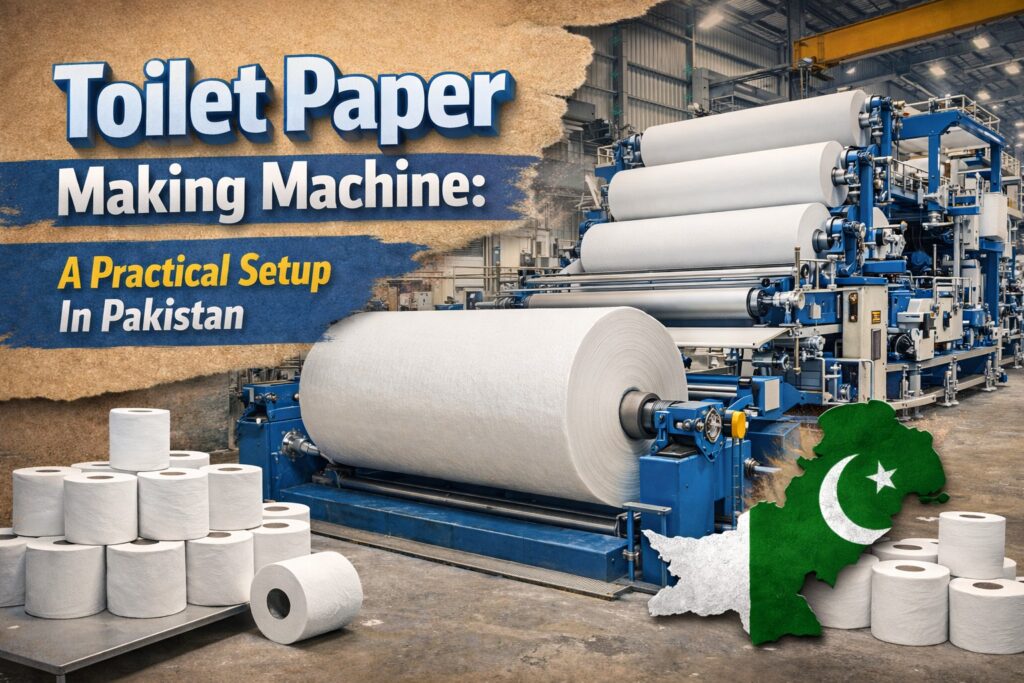
Toilet paper sells every day. Retail shelves move fast, wholesalers keep re-ordering, and institutional buyers stay consistent. That steady demand attracts new investors—but the market punishes poor roll quality and unstable production.
A toilet paper project works when the line runs clean and predictable: uniform GSM, smooth sheet, tight winding, neat perforation, and rolls that hold shape in transport and storage.
Micro Star Machines supplies toilet paper lines as a complete system—built for Pakistan’s operating conditions, raw material variations, and real-world maintenance needs. It’s not a single machine purchase. It’s a planned production line from stock preparation to finishing.
Read More: Where to Get Paper Making Machines?
What People Mean By “Toilet Paper Machine”
Most buyers use “toilet paper machine” as a catch-all. In the mill, two parts do the real work:
- Tissue Base Paper Production (jumbo parent reels)
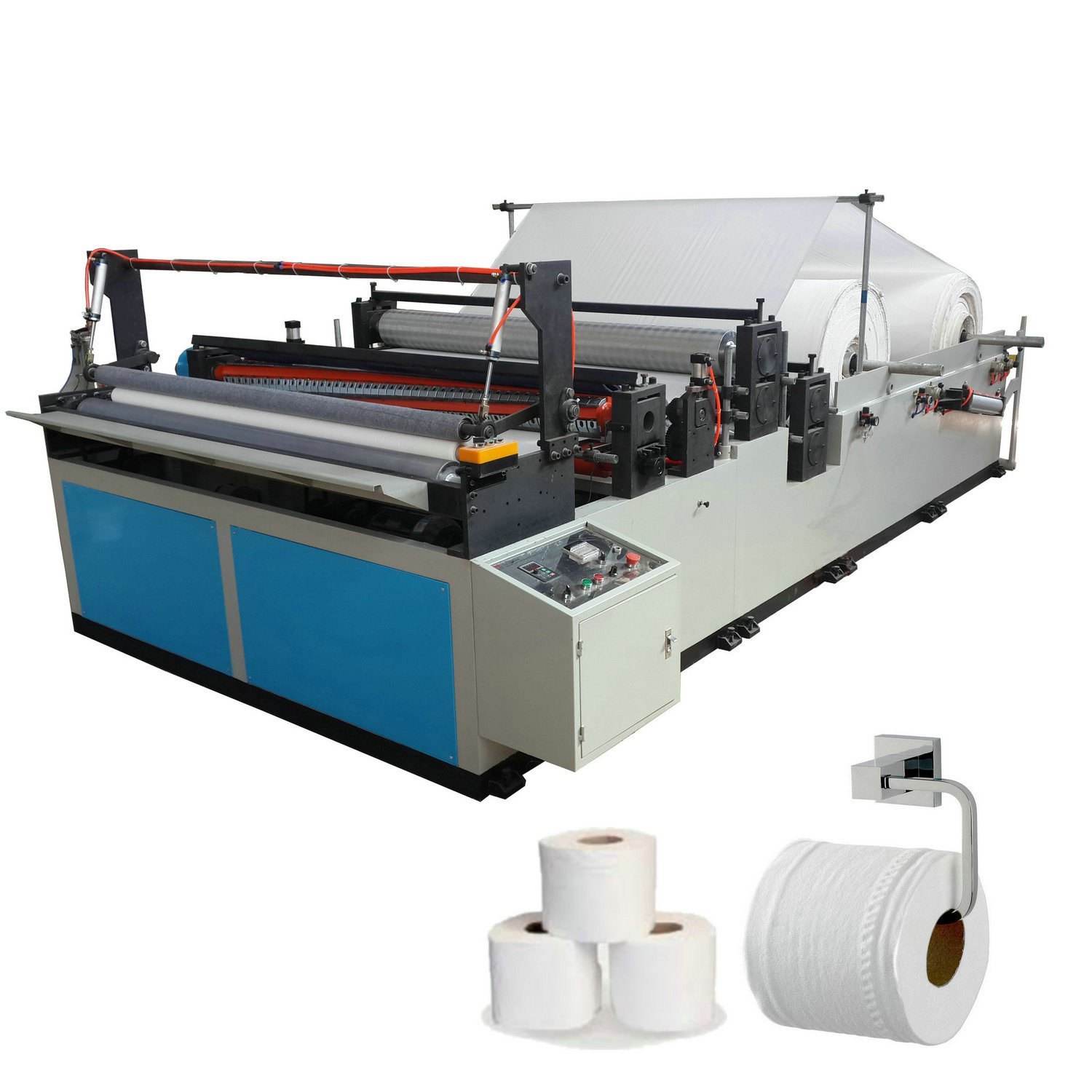
- Converting & Finishing (rewinding, embossing, perforation, cutting, packing)
Some businesses buy parent reels and only run converting. Others produce the base paper and convert in-house. Both models work. The difference comes down to your supply chain, margins, and how much control you want over softness, strength, and consistency.
Start With The Market, Not The Machinery
Toilet paper isn’t one product. Customers in different channels expect different specs.
Retail packs need:
- clean cutting
- stable roll diameter
- consistent winding tightness
- good presentation
Institutional and bulk buyers care about:
- roll length
- strength during use
- fewer defects
- consistent delivery
Once you decide where you’ll sell, you can lock in the basics: ply, GSM, roll size, core size, emboss style, and packaging format. That’s the foundation for the full line design.
Stock Preparation Sets Your Quality Ceiling
Many mills chase roll quality at the converting stage. The real battle starts earlier.
Micro Star Machines includes stock preparation in its toilet paper line scope because tissue grades show defects quickly. A rough or contaminated stock leads to holes, specks, weak spots, and sheet breaks.
Stock preparation normally includes:
- Pulping (waste paper, virgin pulp, or blend)
- Screening & Cleaning (remove sand, plastics, stickies, staples)
- Consistency Control (keep flow stable into the machine)
A clean stock protects your equipment and improves sheet uniformity. Operators also spend less time fighting breaks and dust.
Approach Flow Keeps The Sheet Stable
A tissue sheet doesn’t forgive turbulence. Poor approach flow creates uneven formation, GSM swings, and weak areas that tear during rewinding and perforation.
A well-planned approach flow delivers stable stock to the headbox and supports uniform sheet formation. That stability shows up later where it matters: smoother converting, fewer rejects, better reel build, and cleaner finished rolls.
Tissue Paper Machine: Parent Reels Done Right
The tissue paper machine produces jumbo reels (parent rolls). This stage sets the base characteristics—softness feel, strength, thickness, and formation.
Micro Star Machines configures the machine around your targets:
- production capacity
- reel width (deckle/trim requirements)
- GSM range
- machine speed
- drying type
- automation level
That kind of configuration matters because Pakistan’s mills often deal with changing raw material quality and utility conditions. A balanced setup keeps production steady without constant adjustments.
Converting Makes Or Breaks Your Brand
Customers don’t buy “tissue base paper.” They buy rolls.
Converting and finishing turn jumbo reels into saleable product. This is where mills win or lose shelf credibility.
A complete finishing setup typically covers:
- rewinding
- perforation
- embossing (where required)
- cutting
- roll handling and packing support
Good converting produces tight rolls that don’t telescope, clean edges that don’t fray, and perforation that tears straight instead of shredding.
Specs You Should Finalize Before You Request Pricing
Keep it simple. Share the specs that control the design and cost:
- Target output (TPD or rolls/day)
- Paper type (economy, premium, single-ply, two-ply)
- GSM range
- Jumbo reel width and finished roll width
- Core size, roll diameter, roll length
- Raw material plan (recycled / virgin / blend)
- Factory space and layout limits
- Power and utility details
These inputs allow Micro Star Machines to recommend a practical configuration instead of guessing.
Installation And Commissioning Matter More Than Brochures
Many plants struggle at start-up because nobody owns the full process—from installation to operator habits.
Micro Star Machines supports projects with:
- on-site installation supervision
- commissioning assistance
- operator training
- spare parts planning and after-sales support
That support reduces start-up losses and keeps the line running smoothly long after the first production run.
Get A Quote For A Toilet Paper Machine In Pakistan
Share your capacity and roll specs, and Micro Star Machines can propose a complete toilet paper production line—stock preparation, paper machine, and finishing—matched to your factory setup.
Micro Star Machines (Pakistan)
Phone: +92 (0) 41 8861153
Email: info@microstarmachines.com
