
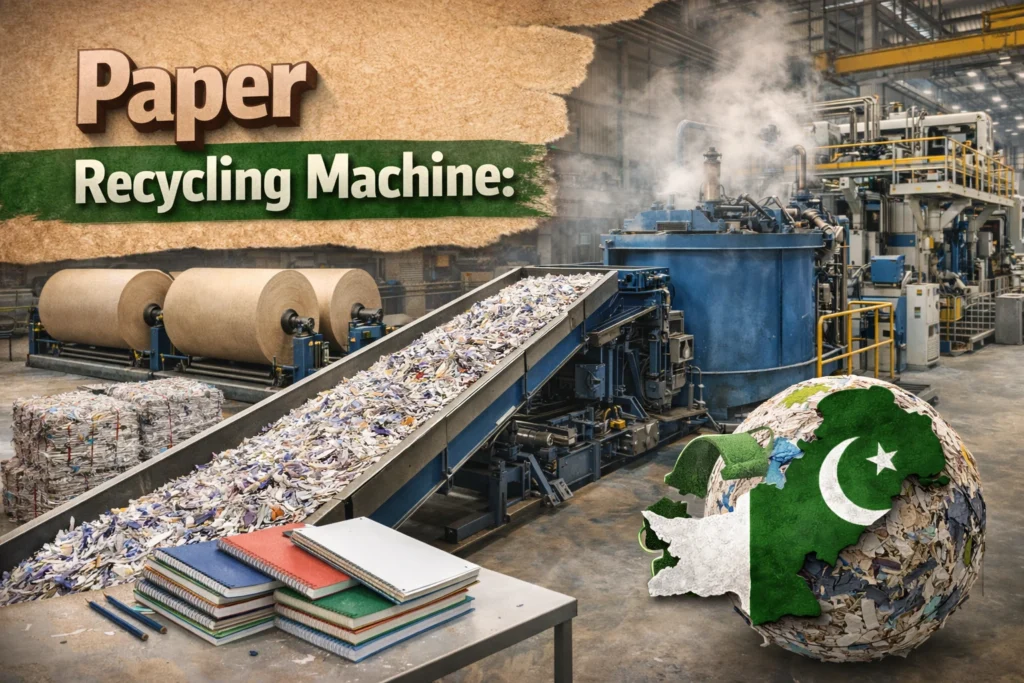
Paper recycling looks simple from the outside. You collect waste paper, you break it down, and you turn it into new paper. On the factory floor, everything depends on one thing: how well your recycling line handles contamination and consistency.
Micro Star Machines supplies turnkey paper mill lines in Pakistan and builds systems that match local raw materials, power conditions, and operating environments. The focus stays clear: steady output, controlled costs, and minimal downtime.
This article explains what a paper recycling machine setup really includes, what usually goes wrong, and how to plan a line that runs clean every day.
Paper Recycling Machine In Plain Terms
A paper recycling machine is not one machine. It is a connected set of equipment that converts waste paper into usable pulp, then feeds that pulp into a paper machine to produce new paper reels.
That system needs balance. When one section runs faster or dirtier than the next, the whole plant pays for it through breaks, poor formation, dirty sheet, and wasted fiber. Micro Star Machines designs the full production line as an integrated system so each section supports the next one.
What You Feed The Line Decides The Line
Waste paper does not come clean. Even a “good” bundle contains tape, plastic, sand, staples, laminated layers, and mixed grades. Your sourcing plan decides how hard the recycling section must work.
Before you lock a machine configuration, decide what you will run most of the time:
- OCC and carton waste for kraft grades
- Mixed office waste for writing and printing grades
- Mixed waste paper where you accept higher cleaning load
A strong line handles variation, but you still need to define your main raw material mix. That decision sets the cleaning intensity, screen selection, and the type of separation you need.
The Core Sections Of A Recycling Line
A practical recycling plant follows a simple flow: break the paper, remove junk, stabilize the stock, then send it forward.
Micro Star Machines describes the complete line as an integrated system that typically includes pulping, screening and cleaning, approach flow, paper machine sections, and finishing equipment.
Here is what those sections do in real production terms.
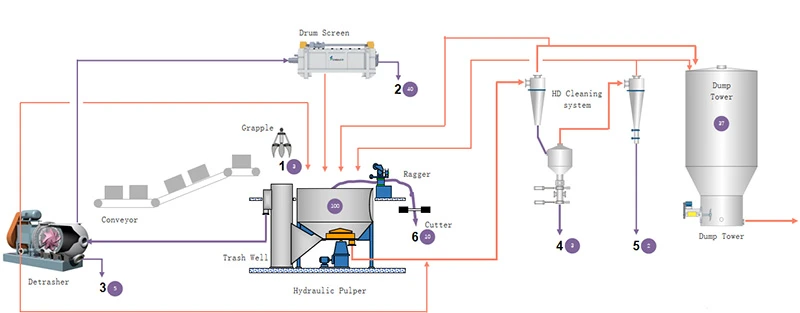
Pulping That Breaks Paper Fast And Safely
Pulping converts waste paper into a fiber slurry. The pulper must break paper consistently without shredding plastics into small pieces that later slip through screens. Operators want strong circulation, stable load, and easy cleaning access.
Micro Star Machines includes pulping systems for waste paper or virgin fiber preparation in its complete line scope.
Screening And Cleaning That Protects Everything Downstream
Screens and cleaners remove the material that causes constant stoppages: plastics, grit, stickies, and heavy contaminants. This section protects pumps, piping, and the paper machine. It also protects your sheet quality.
Micro Star Machines lists screening and cleaning equipment as part of the complete line to remove impurities and protect downstream machines.
Approach Flow That Keeps Stock Stable
Approach flow controls consistency and delivers stable stock to the forming section. When operators keep approach flow stable, they stop chasing GSM swings and formation issues on the paper machine. This is where recycling becomes production grade.
Micro Star Machines includes approach flow systems for stable stock delivery and uniform sheet formation in the typical line setup.
Paper Machine And Finishing That Turns Pulp Into Product
Once the pulp stays clean and stable, the paper machine forms the sheet, dries it, and reels it. Finishing equipment then rewinds, cuts, and handles reels based on your market requirement.
Micro Star Machines includes paper machines and finishing equipment in the full line design.
Contamination Control Is The Whole Game
Many recycling plants lose money in small, painful ways: frequent breaks, dirty sheet, and rejected reels. Contamination causes most of that damage.
That is why it helps to think in two buckets:
- Contamination you must remove early plastics, tape, sand, metals
- Contamination that shows up later as sheet defects stickies, fine plastics, coatings
Micro Star Machines also lists related equipment categories such as waste paper breaking and impurity removal, screening purification, paper plastic separating machines, and sewage treatment equipment. These pieces matter because recycling always creates separation waste and process water load that you must manage properly.
What “Good Pulp” Looks Like In A Recycling Plant
A clean pulp does not mean “white.” It means stable and usable.
Your pulp needs:
- Consistent freeness and drainage behavior
- Controlled consistency at each stagelow visible
- Contaminants and low speck count
- Predictable strength performance for the grade you sell
When your pulp stays stable, your operators stop “fixing the machine” all day. They start running production.
Build For Running, Not For Launch Day
Plants often run well during commissioning and struggle later. Real production brings raw material swings, shifts change, and maintenance shortcuts.
Micro Star Machines backs equipment supply with on site installation supervision, commissioning assistance, and hands on operator training. The company also plans spare parts supply and after sales support for long term reliability.
That support matters most when the mill needs to hold output targets every week, not just during startup.
Get A Quote For A Paper Recycling Machine In Pakistan
Share these basics and Micro Star Machines can recommend a practical recycling line configuration:
- Target output per day
- Paper grade you plan to produce
- Waste paper mix you will source
- Required GSM range and reel width
- Available space and utilities
Phone: +92 (0) 41 8861153
Email: info@microstarmachines.com
